Posts

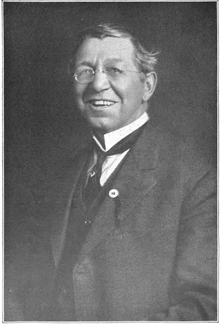
May 1, 1894: Coxey's Army, the first significant American protest march, arrives in Washington D.C.
Image
After the Panic of 1893 gripped the United States, political activist Jacob Coxey and associates decide to march on the capitol to protest for greater workers rights. As Coxey and his entourage marched toward the capitol, they gained followers from all walks of life. When they reached the capitol, the sight was one never seen in Washington before. The protest was quickly quelled, with Coxey being arrested for trespassing on public lands.
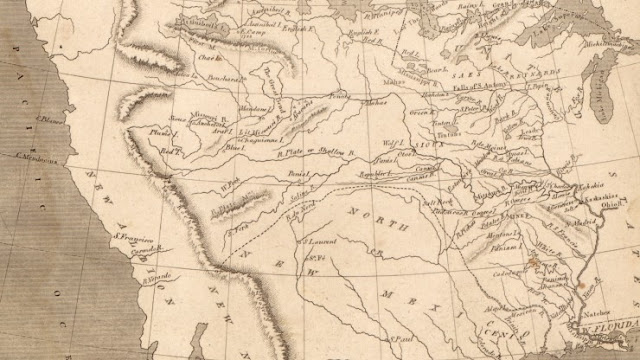
April 30, 1803: The United States purchases the Lousiana Territory from France for $15 million, more than doubling the size of the country

Image
Before European settlement, the territory of Louisiana was home to numerous native tribes of the Plains nation. Throughout the 18 th century, France laid claim to the vast territory. With their defeat in the Seven Years War, France was forced to cede the territory to Spain. With the establishment of the United States in the wake of the American revolution, the fledgling country began to pursue a sphere of influence on the neighboring territory. In 1800, Napoleonic France reacquired Louisiana from Spain. However, Napoleon’s ongoing wars with his European rivals put a heavy strain on the French treasury. Napoleons woes were furthered, with the lose of France’s Haitian colony due to a popular revolt. The territory became a huge financial liability to him and he sought to sell it. In 1803, President Thomas Jefferson sought to purchase the port city of New Orleans, in the Louisiana territory. He dispatched James Monroe and Robert Livingston to Paris to negotiate for the city. Du...

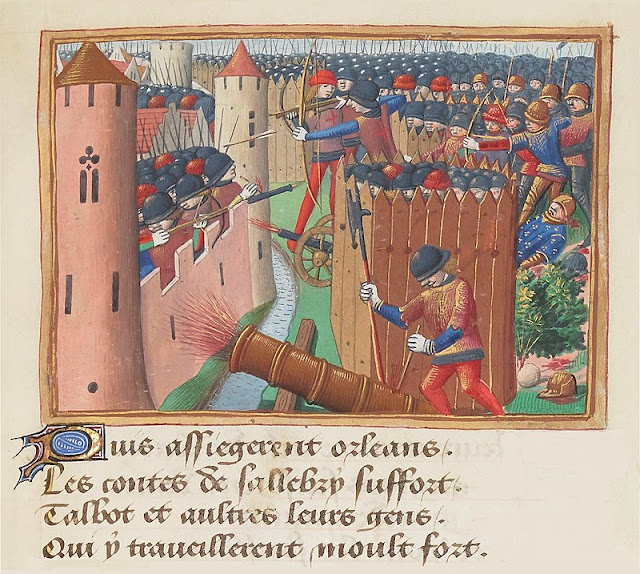
April 29, 1429: Joan of Arc arrives to relieve the Siege of Orleans

Image
Joan of Arc was born in the small French village of Domremy around 1412. She was to the daughter of minor landholders, Jacques D’Arc and Isabelle Romee. During her childhood, France was in the grip of the Hundred Year War with England. When Joan was three, the French experienced a terrible defeat at the Battle of Agincourt. On top of the war with England, France was in the middle of a succession crisis. King Charles VI experienced periodic bouts of insanity and was frequently unable to rule. In response, the court split into two factions. The Armagnacs led by the heir to the throne, Charles who wanted to press his claim to the throne, and the Burgundians led by John the Fearless, Duke of Burgundy, wanted to establish a regency to rule in the King’s stead. France was beginning to splinter, as the teenaged Joan took fateful trip to her father’s garden on sunny afternoon. One day in 1425, Joan walked through her father’s garden. As she walked, ethereal voices spoke to her. They we...

April 28, 1788: Maryland becomes the seventh state after it ratifies the United States Constitution

Image
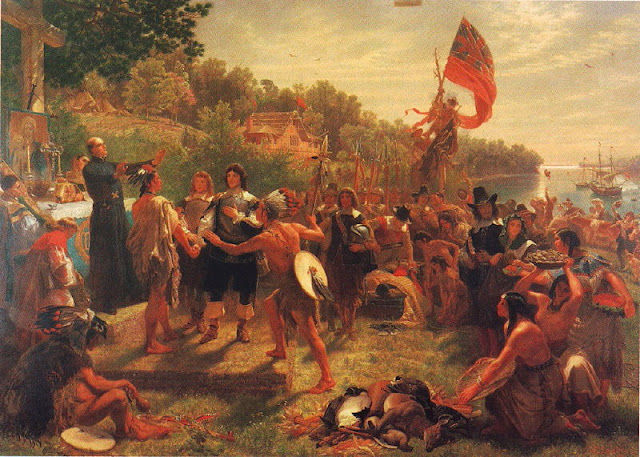
Before European settlement, Maryland was home to the Iroquois and Algonquin peoples. During the 16 th century, Italian explorer Giovanni de Verrazano explored the mouth of the Chesapeake Bay; and John Smith further explored it in 1608. In 1632, George Calvert, 1 st Baron Baltimore, applied to King Charles I for a royal charter for the area surrounding Chesapeake Bay. When Calvert died, his son, Cecilius Calvert, 2 nd Baron Baltimore, was granted the charter in his stead. The colony was named in honor of King Charles’s wife, Queen Henrietta Maria. Upon its establishment, the colony of Maryland was predominantly Catholic, due to the shared religion of the Queen and Calvert’s. The new colonists landed at St. Clements’s Island on March 25, 1634. St. Mary’s City was established as the colony’s capital, and would remain such until 1695. In 1649, the colonial legislature passed the Maryland Tolerance Act, which fostered the free exercise of religion throughout the colony. However, whe...

April 27, 1813: American troops capture York, the capital of Upper Canada, in the Battle of York

Image
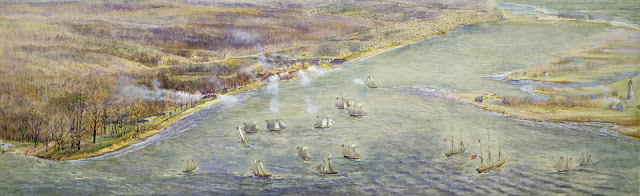
When the United States declared war on Great Britain in 1812, military planners recognized the need to capture Britain’s Canadian holdings. Early in 1813, they drew up plans to capture the large British province. The Navy dispatched a fleet under Commodore Isaac Chauncey to gain control of the Great Lakes, in order to disable British naval superiority, there. The Secretary of War, John Armstrong convinced the Navy to defer Chauncey’s expedition and send him instead to blockade the capital of Upper Canada in conjunction with the Army. The War Department dispatched troops under General Zebulon Pike to take the capital, York. On April 26, American forces arrive outside the city. Chauncey’s squadron began to bombard the settlement, in order to aid Pike’s troops advance. As Pike’s troops encircled the city, a magazine exploded, sending debris flying all over the battlefield. Pike collapsed, mortally wounded by the falling debris. Later that afternoon, York surrendered to American f...

April 26, 1865: Federal troops track down and kill John Wilkes Booth, assassin of President Abraham Lincoln

Image
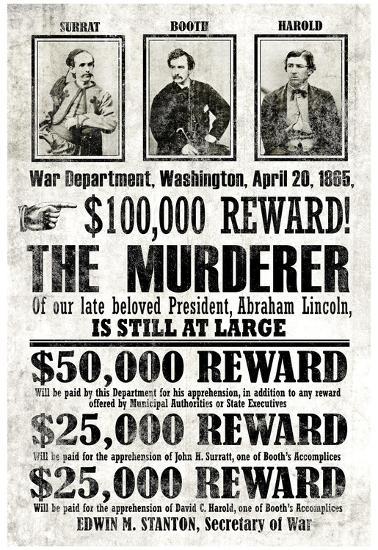
(For the events of the Lincoln Assassination, please see the entry for April 14) John Wilkes Booth rode into the cold Virginia mist as the capitol closed in around him. Crossing the bridge into Maryland, he met up with his accomplice David Herold. Booth and Herold then rode to the Surratt Tavern, to pick up guns and equipment. Booth had to stay on horseback as his leg was severely injured in his fall from the President’s box that night. Herold knew that they would need to fix Booth’s leg before they journeyed farther south. They rode to the home of Dr. Samuel Mudd, who quickly splinted Booth’s leg and allowed the two men to stay the night. The following morning, they headed to the home of Confederate spy, Samuel Cox in hopes to that he would help transport them into the Confederacy. As Booth and Herold arrived at Cox’s house, a unit of federal cavalry was dispatched from Washington to hunt for the two fugitives. Cox informed the two men that federal troops were combing the are...

April 25, 1862: Admiral David Farragut demands the surrender of the Confederate city of New Orleans, Louisiana

Image
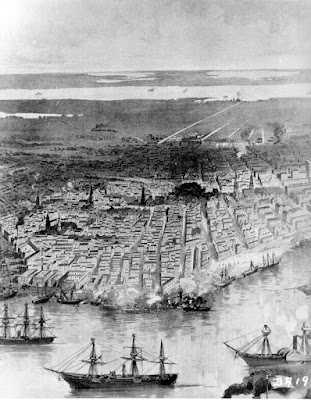
At the beginning of the Civil War, the capture of New Orleans was key to Union’s strategy to defeating the Confederacy. Union leaders devised a plan in which capturing New Orleans would allow them further control of the Mississippi River. On April 25, 1862, a Union fleet under the command of Admiral David Farragut broke through the Confederate defenses and anchored outside the port city. Three days later, New Orleans capitulated giving the Union sole control of the Mississippi River.